 The news came through this week of the first cases of a disease called Ash die back being found in our native woodland. Although only found in young trees in a small area of East Anglia, this fungal infection is airborne and can potentially travel up to 20km. Discovered on the continent over twenty years ago the disease has claimed 90% of the Ash population in Denmark. Ash trees account for more than 30% of British woodlands, so the effect on our landscape would be devastating. As a young boy I remember seeing countless trees being felled where I grew up, when I asked why I was told it was to stop Duch Elm disease. Well it did stop it, but only after we had felled most of the Elm's in the country. As with all diseases of this nature once they are establish it is near impossible to halt the destruction.
The shocking part of this sad story is that none of this needed to happen, yet again it's a case of our insane import/ export culture. This disease was introduced to this country from imported Ash saplings, even though up until now they grew in abundance here. And now the thing that is stopping our government from an all out import ban is the worry of a slap on the wrists from Brussels.
 Apart from its beauty and iconic status in our country side the Ash tree offers a strong, versatile timber with a striking grain pattern that will be much missed by both domestic and green woodworkers alike. Let us all hope it's not too late to act this time.

 A lifetime ago when starting my apprenticeship we were told by one of the tutors that we would need two things, one was the best set of chisels we could afford, I went for a set eight Boxwood handled Marples, and the other was a book by Ernest Joyce called 'The technique of furniture making'. It was good advice becouse thirty years later I still use both constantly.
 It is probably clear that I have a love of this text, as well as being a companion throughout my career I have had the great fortune to chat to Alan Peters a few times when exhibiting together, he was one of the greats and a lovely humble man. Also some years back a discoverd by chance that an old friend is in fact the granddaughter of Ernest Joyce, she shared some of her childhood memories of the man and showed me a few pieces of his work still in possession of the family.
 It is a constant challenge in the workshop to come up with new ideas that either improve the quality of the work, or make the producing of it a little easer. From something as simple as a bench stop, to a whole new pice of machinery, these innovations can in a moment change the way you make your furniture. As well as enhancing production, it's a great motivator to see new schemes and plans making a difference.


 Delivering a restored chair to a client some weeks back, I caught sight of myself in a full length dress mirror. Looking back at me was a wild man who looked like he had spent the last few months sleeping rough in the woods scavenging for timber. It's all very well having the dress code of Ben Gunn when alone in the workshop, but when out in public or worse at a customers house, you need to make some effort. People will expect to see a craft worker looking the part, but to knock on the door looking like an extra from a disaster movie can be a little off putting.


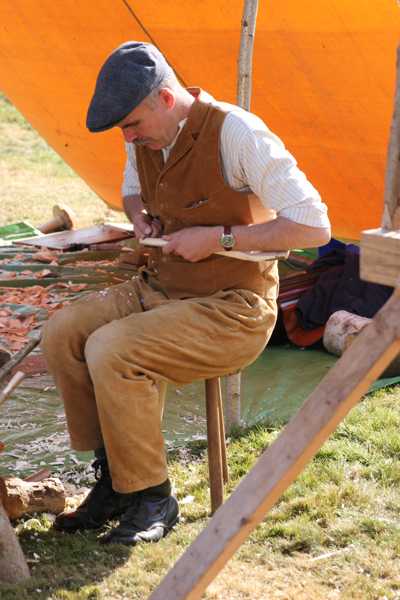
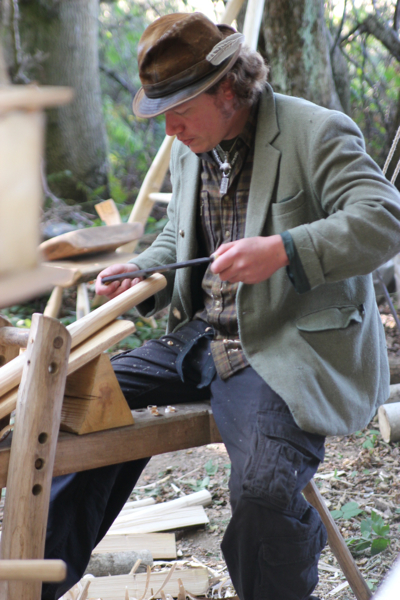 One date that is clearly marked and religiously set aside in both mine and my son's calendar is the annual Woodfair held at Bentley Wildfowl and Motor Museum in Halland East Sussex. Last year we along with many other enthusiasts of all things timber, tolerated driving rain and high winds all day. Which for an open air event dedicated to timber, tools and electric machinery was far from ideal. Thankfuly the weather this year was glorious with a blue sky that was filled with nothing more than a few silent white gliders from a nearby air strip.
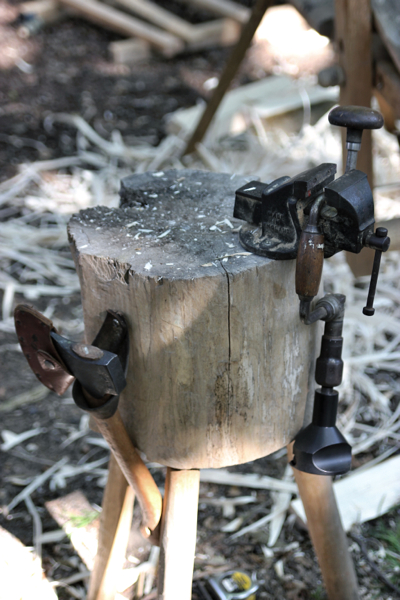
 After spending the best part of last week having my mind bent with working out quotes this week has thankfully been spent machining timber. That is apart from a day on site fitting two ledge and brace doors.

 Work seems to be rolling in a pace, which is great, although most of this week has been spent at the drawing board and working out quotes. The drawing I like, the quotes I don't. Even though I been doing this for over twenty five years now I still find working out a quote hard work. How do you know how long a pice of furniture will take you to make when you have never made it before! OK looking back on past work you can get an idea of how much time a set of dovetails will take, or machining up 5 cube of timber, but the very nature of bespoke work means that each new project is a one off. At some point I will commit to this blog my own secret formula for working a quote, it's not perfect but it's a good place to start.
